A closer look at “smokeless”
Smokeless fire pits still smoke.
Wet logs. A cold start. A fire that never gets hot enough. The word “smokeless” does not make those problems disappear. Before you pay for the promise, understand the conditions behind it.
By Edge Right · A guide to choosing your fire pit
Start with the short answer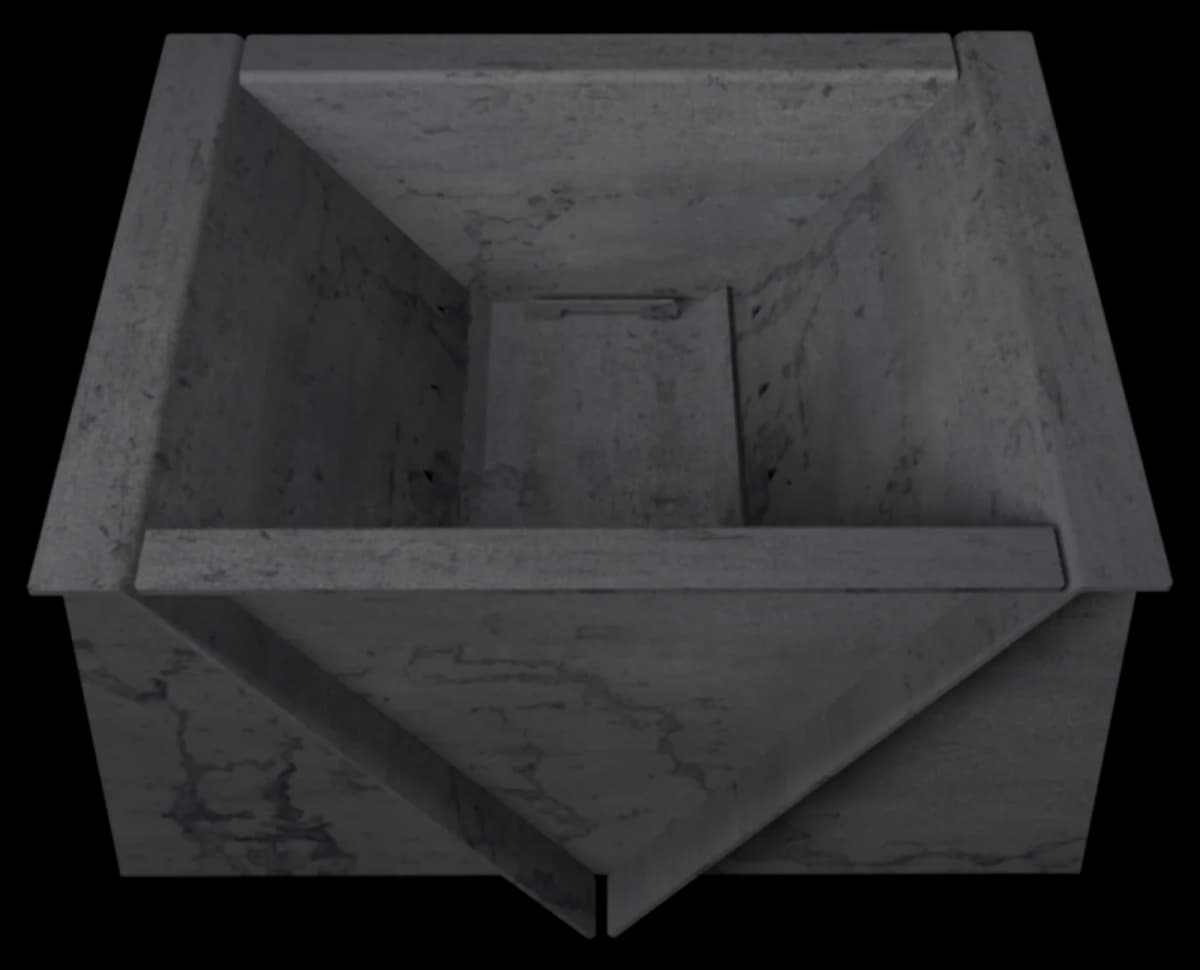
The short answer
The catch is the conditions.
A hot fire with dry wood can produce much less visible smoke. That does not promise a smoke-free evening from the first match to the last ember. Fuel, temperature, loading, and airflow still affect what you experience.
Start with what you’re burning. Then ask how much tending, firewood, and heat the design needs to deliver the result you expect.
01 / The conditions behind the claim
The wood and the way you burn it still matter.
A secondary burn needs heat and oxygen to burn more of the smoke-producing gases. That leaves practical conditions a product label cannot remove.
1. Damp or green wood
Use dry, seasoned firewood. A moisture meter helps you check it; the EPA recommends about 20 percent moisture. Skip freshly cut wood, garbage, and yard waste.
2. Enough heat
A cold start or a small, struggling fire is different from a fully established burn. Ask whether the fire you want to sit around is large and hot enough for the pit’s recommended operation.
3. Too little airflow
Packed logs and excess ash can restrict air. Keep air passages clear and follow the loading limit. Wood extending above a secondary-burn zone can still smoke.
Dry, seasoned wood is a useful starting point for any wood fire. The EPA’s firewood guidance explains how moisture and fuel choice affect the burn.
Reduced visible smoke does not mean a wood fire has no emissions. The EPA’s backyard fire guidance explains wood smoke and responsible burning. Consider wind and neighbors, and follow local fire restrictions.
02 / Beyond the marketing
What independent testing actually found.
A 2025 USDA Forest Service study compared two pits marketed as “smokeless” with a traditional campground fire pit across 31 burns. All three produced similar overall amounts of fine particles per kilogram of wood burned. The researchers pointed to their similar barrel-shaped designs. Read the study summary.
The tested pits emitted less particulate matter than the EPA inventory estimate for traditional pits and rings. They still produced measurable emissions. The research supports looking at the design, the fuel, and the conditions together. See the full report.
Edge Right was not tested. These results do not establish equal smoke performance across other designs or show how often an owner will notice smoke.
03 / Choosing for your backyard
Ask to see the whole fire.
A short clip of a roaring fire tells you little about lighting it, keeping it going, or waiting for it to finish. Look for an uncut burn with the kind of wood and fire size you expect to use.
How much fire do you want?
Ask how often you will add logs and whether a smaller fire can maintain the recommended burn. Include the firewood in the cost of an evening outside.
Where do you feel the warmth?
Check warmth at your chair, not just above the flames. If the setup needs a heat deflector, stand, lid, or cover, compare the complete price and storage needs.
| What matters | Smokeless wood-burning designs | Edge Right open fire pits |
|---|---|---|
| Smoke expectations | Check performance during lighting, normal use, and the end of the fire. The label does not promise zero smoke. | The Firepit can burn with little visible smoke with dry wood, good airflow, and a hot, established fire. We make no smokeless claim. |
| Construction | Often a double-wall body with air passages and upper vents. Materials vary by model. | Five interlocking pieces of American plate steel, with an open V-shaped fire area. |
| Durability | Compare the actual steel, thickness, construction, care instructions, and warranty. | The Firepit 34 in 3/16-inch or the Firepit 40 in 1/4-inch plate steel. Check dimensions and handling before choosing. |
| Moving and cleaning | Weight and ash-removal systems vary. Check the specific model. | Built for a spot in the yard. Two-person assembly and a removable bottom plate. |
| Fuel and fire size | Ask how much dry wood and ongoing tending the recommended fire requires. Do not judge it only by a fully established demonstration fire. | Dry, seasoned wood, good airflow, and an established fire help reduce smoke in an open fire pit, too. |
Scroll the table sideways to compare.
Also check any cooking accessories, placement requirements, and the manufacturer’s instructions. Those details vary by product. Edge Right is sold as a fire pit, not a grill.
04 / Our approach
An open fire can burn with less smoke, too.
With dry, seasoned wood, good airflow, and a hot, established fire, the Firepit can burn with little visible smoke. Lighting, damp wood, and smoldering can produce more smoke. The EPA’s firewood guidance explains why dry wood burns hotter and cleaner. These conditions matter in open fire pits as well as designs marketed as smokeless.
We do not call the Firepit smokeless, in either size. We build it for people who want a substantial fire pit as part of their backyard. The panels slot together without tools. The V-shaped sides hold the wood over the bottom plate, which lifts out for ash cleanup once everything is cold.
The Firepit 34 uses 3/16-inch plate steel; the Firepit 40 uses 1/4-inch plate steel. Both use the same five-piece approach. Choose between them by the space you have, the scale of fire pit you want, and the handling involved. See the current dimensions and full specifications on the product page.
Compare the Firepit sizesA few direct answers.
Are smokeless fire pits really smoke-free?
No. The label describes an approach to reducing smoke, not a guarantee that no smoke will be produced. Fuel moisture, fire temperature, and airflow affect the result. Independent testing still measures particles from these fires.
Why is my smokeless fire pit smoking?
Check for damp wood, a fire that is still warming up, excess ash, or logs blocking airflow. Secondary combustion needs heat and oxygen to work. Follow the manufacturer’s fuel and loading instructions.
Will dry wood make any fire pit smokeless?
No. Dry, seasoned wood helps a fire burn with less smoke, but fire-pit design still matters. Better fuel does not add a secondary-burn system to an open fire pit or guarantee a smoke-free fire.
Is the Edge Right fire pit smokeless?
We make no smokeless claim. With dry, seasoned wood, good airflow, and a hot, established fire, the Firepit can burn with little visible smoke. Lighting, damp wood, and smoldering can produce more smoke. Our fire pits use thick plate steel and an open fire area, without a double-wall secondary-burn system.
What should I check beyond the smokeless label?
Look at the complete burn, the fire size and fuel it takes to maintain it, warmth where people sit, ash cleanup, steel thickness, and the cost of any accessories you need. Choose for how you actually use your backyard.